How Blue Ridge Industries Helped FastenCaps Develop a Better, American-Made Product
Key Takeaways
Design for Manufacturability: Blue Ridge Industries transformed an initial product concept into a design suitable for plastic injection molding.
Material Selection: Blue Ridge provided material recommendations based on the product's performance and application requirements.
Prototype Validation: Prototypes were developed to validate the final design before moving into production.
Tooling Coordination: Blue Ridge worked with its tooling partners to develop the injection mold needed for manufacturing.
Production Support: Blue Ridge helped FastenCaps move from an initial concept to a successfully launched product.
Situation
Strut channels are widely used in electrical, mechanical, HVAC and structural applications. When cut to length, these channels can leave sharp metal edges exposed, creating potential hazards for people and equipment. Plastic end caps offer a simple solution, covering exposed edges while providing a clean, professional finished appearance.
While strut-channel end caps were already available, FastenCaps saw an opportunity to improve upon existing products. Many options on the market offered inconsistent quality and limited aesthetic appeal, while overseas sourcing could result in extended lead times. FastenCaps wanted to develop a higher-quality, American-made alternative that offered improved functionality, a more professional appearance and greater color flexibility—all while maintaining a competitive price point.
The FastenCaps team brought firsthand knowledge of how these products were used and where existing options fell short. What they needed was a manufacturing partner that could translate those insights into an improved product design and establish a reliable, cost-effective manufacturing process.
FastenCaps turned to Blue Ridge Industries (BRI) for its product development, engineering and injection molding expertise.
Solution
BRI began by collaborating with FastenCaps to understand the product's intended applications, performance requirements and opportunities for improvement. The teams evaluated existing products, discussing what worked, what could be improved and which features would deliver the greatest value to customers.
Using this information, BRI's engineering team developed a new part design, applying design for manufacturability (DFM) principles throughout the process. The objective was to improve the product's fit, functionality and appearance while ensuring it could be consistently and cost-effectively manufactured through injection molding.
This upfront engineering work was critical. Factors such as part geometry, wall thickness, material flow, part release and repeatability all needed to be considered. Equally important was avoiding unnecessary complexity that could increase tooling and production costs without adding meaningful value to the finished product.
Material selection was another key consideration. BRI consulted with FastenCaps to evaluate resin options and identify materials that would provide the appropriate balance of durability, performance, appearance and manufacturability. BRI also offered the ability to manufacture the caps in custom colors, addressing another limitation FastenCaps had identified with existing products.
Once the design was developed, BRI produced prototype parts to evaluate fit, function and overall product performance. This validation process allowed the teams to confirm the design before committing to production tooling.
With the design and material requirements established, BRI worked closely with its tooling suppliers to develop and build the production mold. The tooling process translated the engineered design into a mold capable of consistently producing quality parts to the required specifications.
Throughout development, BRI maintained close communication with FastenCaps, explaining technical considerations, answering questions and helping the team understand how each decision could impact product performance, cost and manufacturability.
This collaborative approach extended across BRI's sales, engineering, quality and manufacturing teams. By providing transparency, technical guidance and a willingness to work through the details, BRI helped FastenCaps confidently navigate the complexities of bringing an improved product to market.
Results
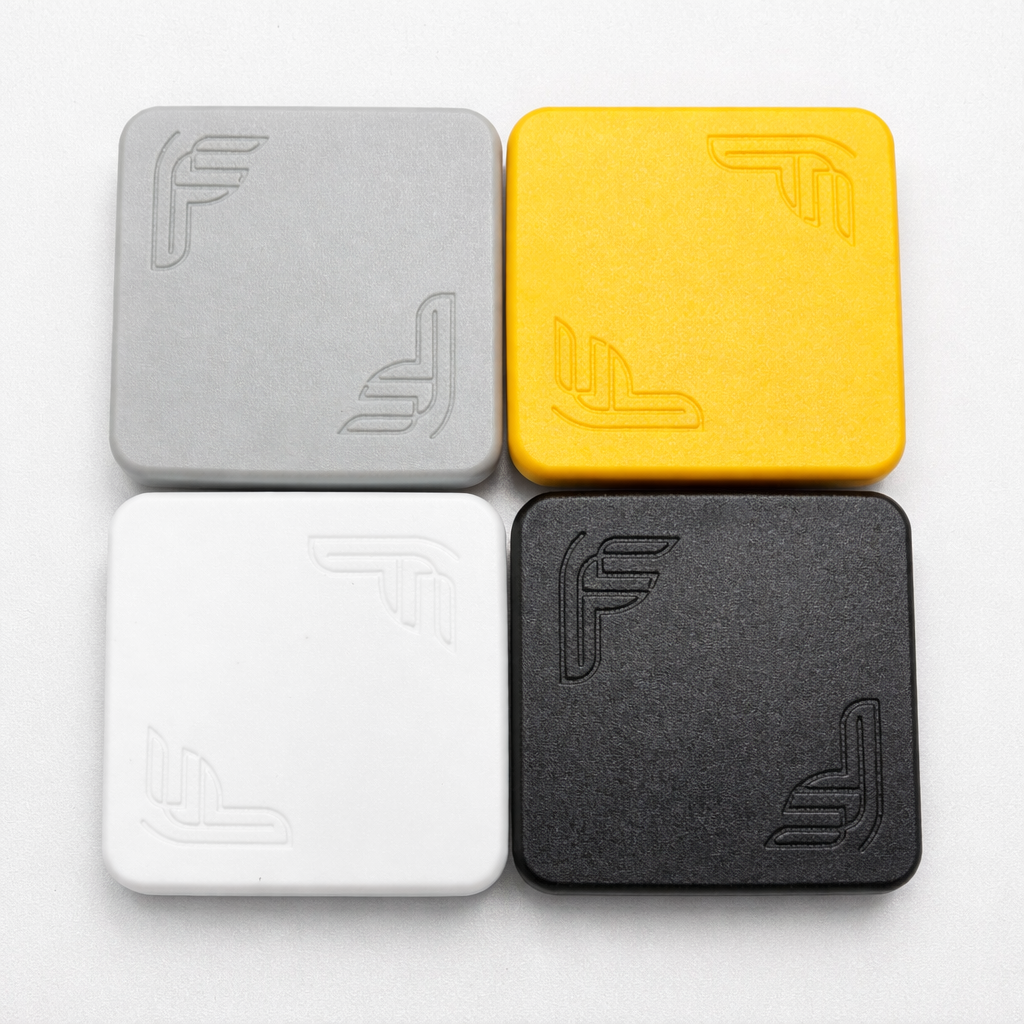
The collaboration resulted in the successful development and launch of FastenCaps' line of American-made, injection-molded strut-channel end caps.
By combining FastenCaps' knowledge of customer needs with BRI's engineering, materials, tooling and injection molding expertise, the companies developed a product designed to address shortcomings in existing market offerings. The finished product provides improved quality and aesthetics, along with multiple color options, while supporting FastenCaps' goal of offering a competitively priced, domestically manufactured solution.
Beyond the successful product launch, the project established a strong relationship built on trust, communication and shared commitment to the product's success.
For FastenCaps, having a manufacturing partner that was accessible, patient and transparent throughout the development process was especially valuable. BRI's team took the time to explain each step, provide guidance and involve FastenCaps in important decisions. This gave the company greater confidence in the product and the investments required to bring it to market.
For BRI, the project demonstrates how technical expertise and a people-focused approach work together to deliver value. From initial product discussions through engineering, prototyping, tooling and production, BRI provided more than manufacturing capabilities. It served as a collaborative partner invested in helping FastenCaps succeed.
About the Author
John Felty (LinkedIn profile: https://www.linkedin.com/in/john-felty-3b3aa524/)
John Felty is a Sales Engineer at Blue Ridge Industries (BRI), a 100-person, 25-press injection molder in Winchester, Virginia, serving OEM and industrial customers across a range of markets. He came to BRI after more than 15 years in corrugated packaging sales. His role covers outside sales, quoting, and contract negotiation, along with hands-on marketing, including BRI's brand refresh, website relaunch, and the content that connects the company with the right customers.
What carried over from packaging to molding was the approach rather than the product. John builds the relationship first, works to understand the problem a customer is actually trying to solve, and walks them through the technical side without the noise. For him, sales is about more than orders. It means taking the time to understand customers' needs and providing tailored solutions that drive their success for years to come.